The departments involved in delivering the project were Process Engineering (VT), Assembly and Relocation Central (MVM), Assembly and Relocation South (MVS), and Automation 1 (ATM1). Thanks to close collaboration between the specialist teams, the project was implemented in full as a turnkey solution without external interfaces.
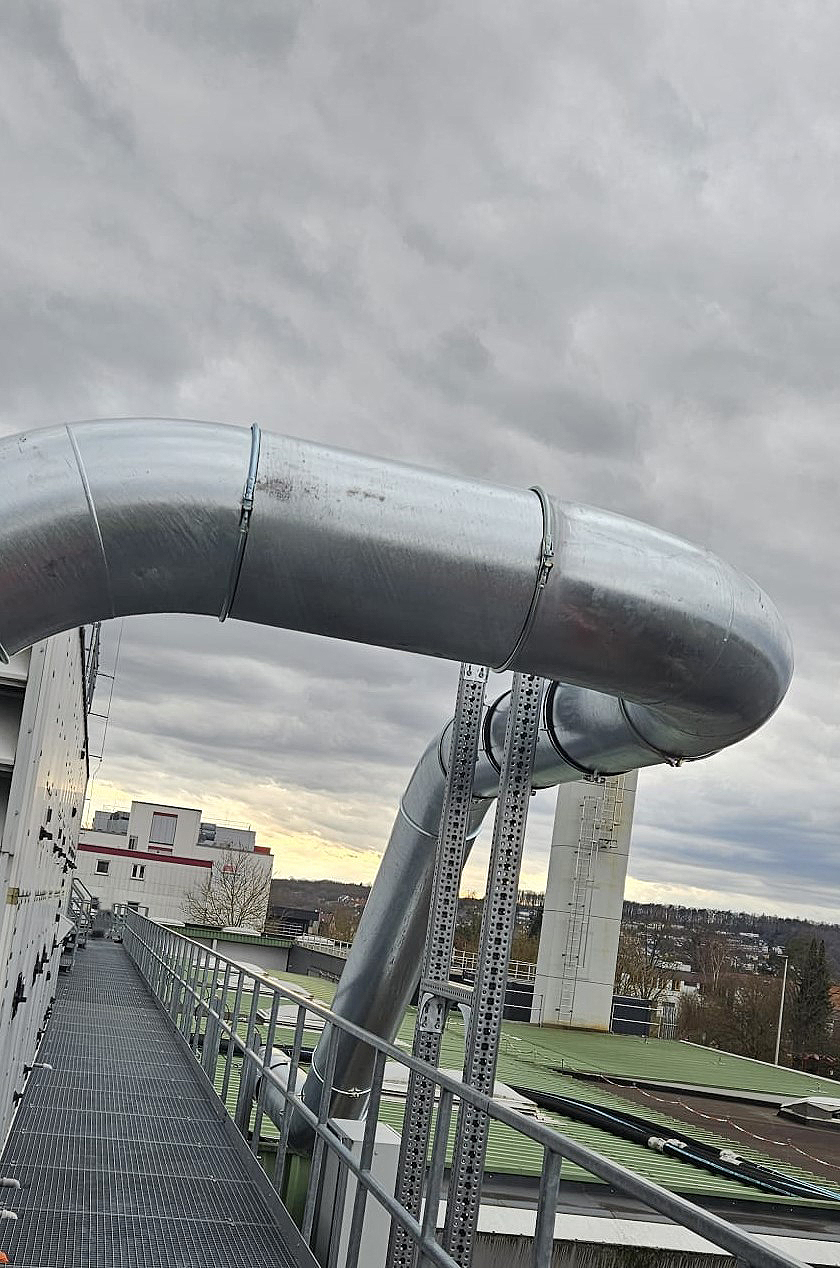
At the outset, the system concept was developed together with the customer and technical feasibility was assessed. Based on this, the process design of the system was carried out, including sizing the filter, fan, cooler, and after-filter. In parallel, structural calculations were performed and the fastening and structural requirements were coordinated together with partner Hilti.
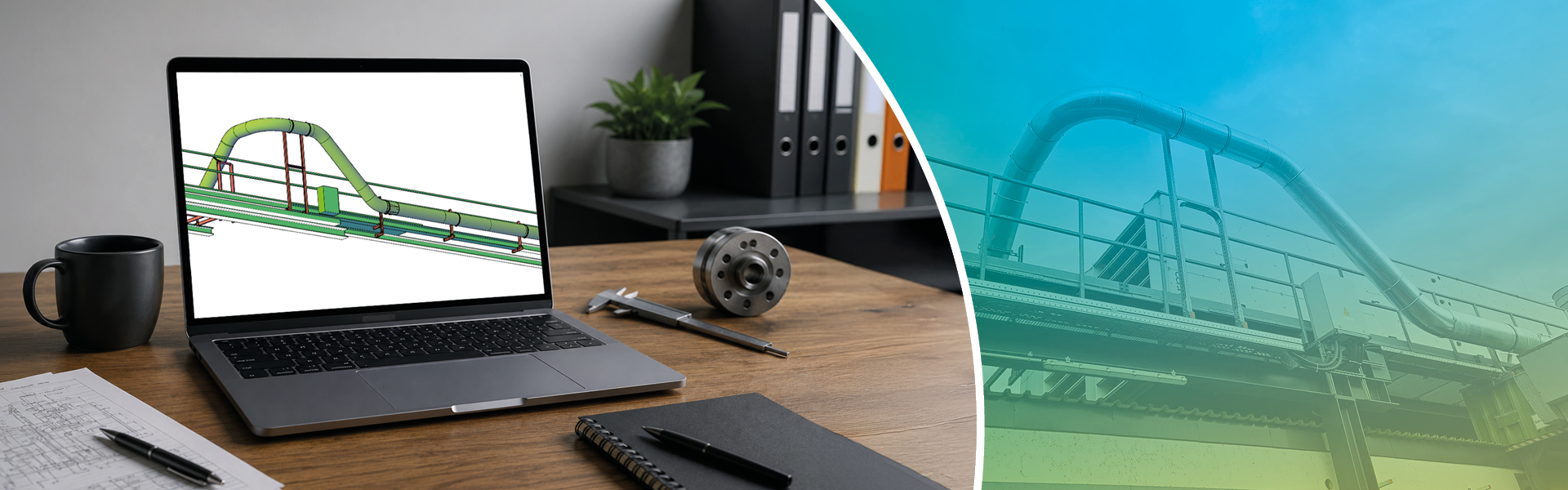
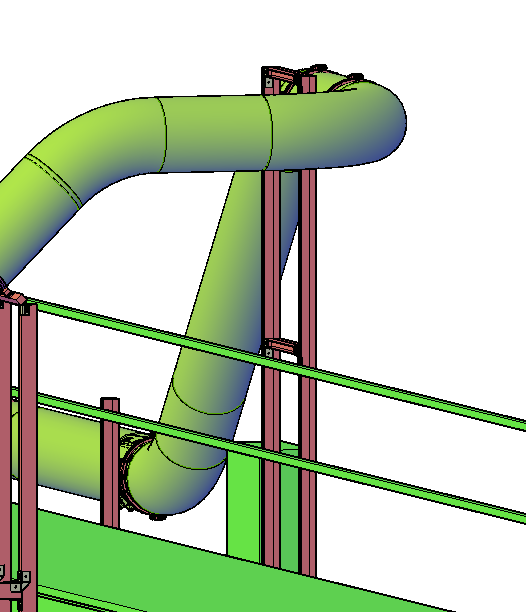
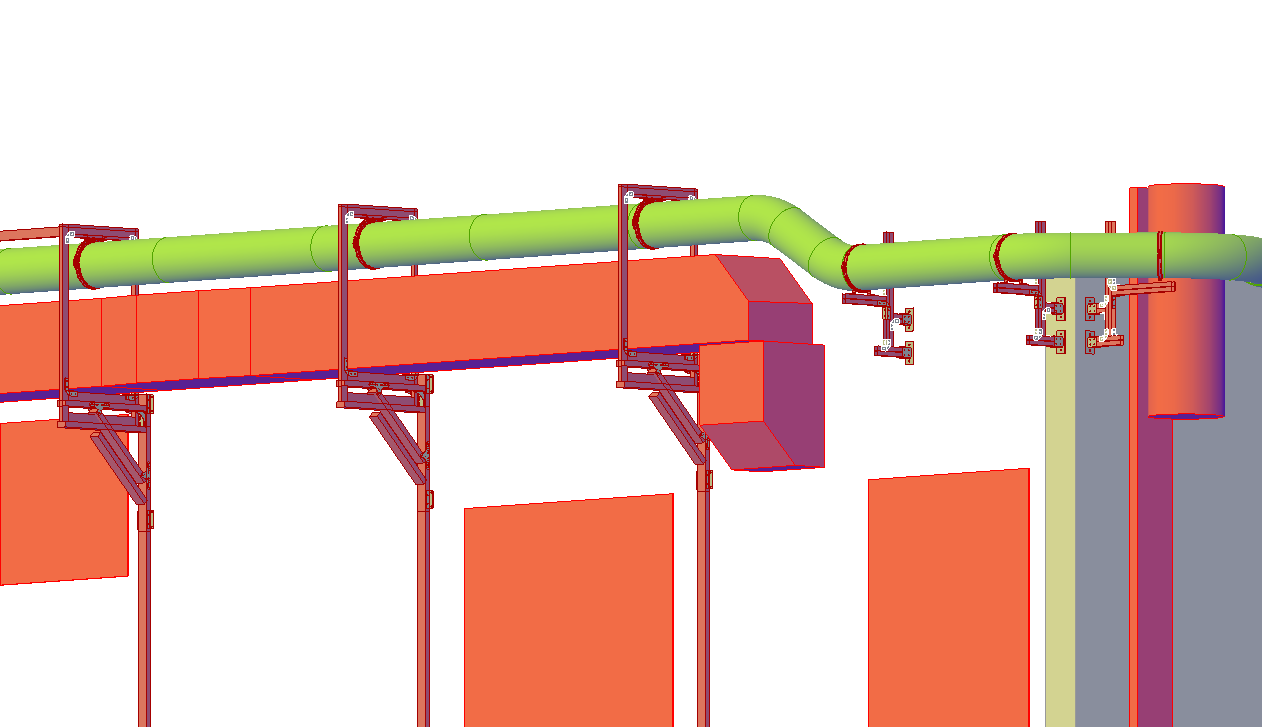
For detailed planning, the existing production environment was digitally captured using a 3D laser scan. Using the modeled 3D model, piping, steel structures, and HVAC ducts were jointly planned in AutoCAD and coordinated to be collision-free. In addition, sound insulation was designed based on an acoustic report.
In parallel, the ATM department developed the complete automation solution. This included planning the control software, designing the control cabinet, and specifying the electrical connection and all cable routes, as well as the installation.
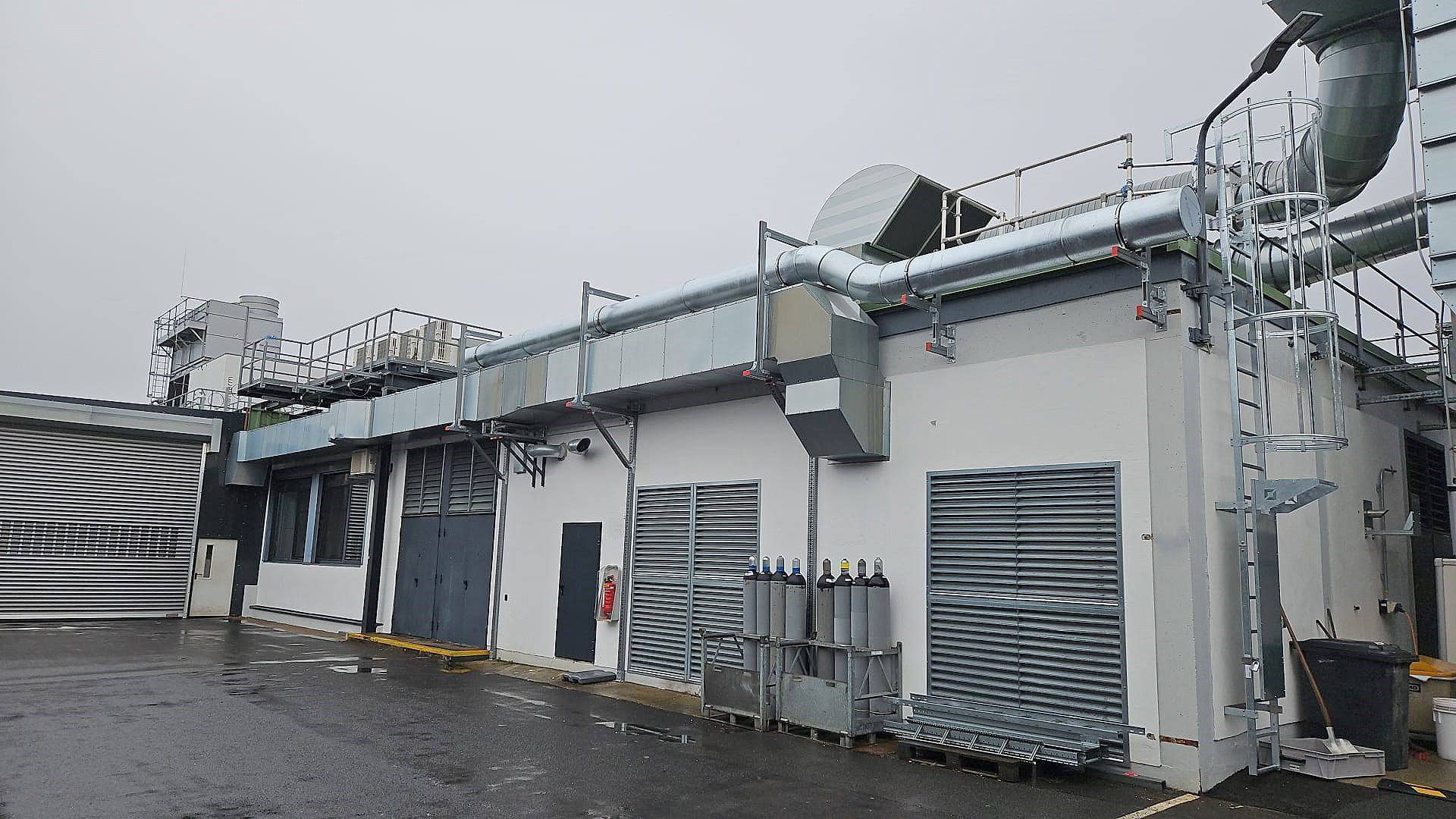
After the engineering phase was completed, all components were procured and installed. Throughout the entire project, weekly project meetings were held to align schedules, technical changes, and decisions. Despite challenges such as structural requirements, building permits, ongoing production, and weather-related restrictions for outdoor installations, the project was successfully delivered. The final steps were commissioning, the risk assessment, and full CE certification of the overall system.