Which moment from your apprenticeship do you remember most fondly?
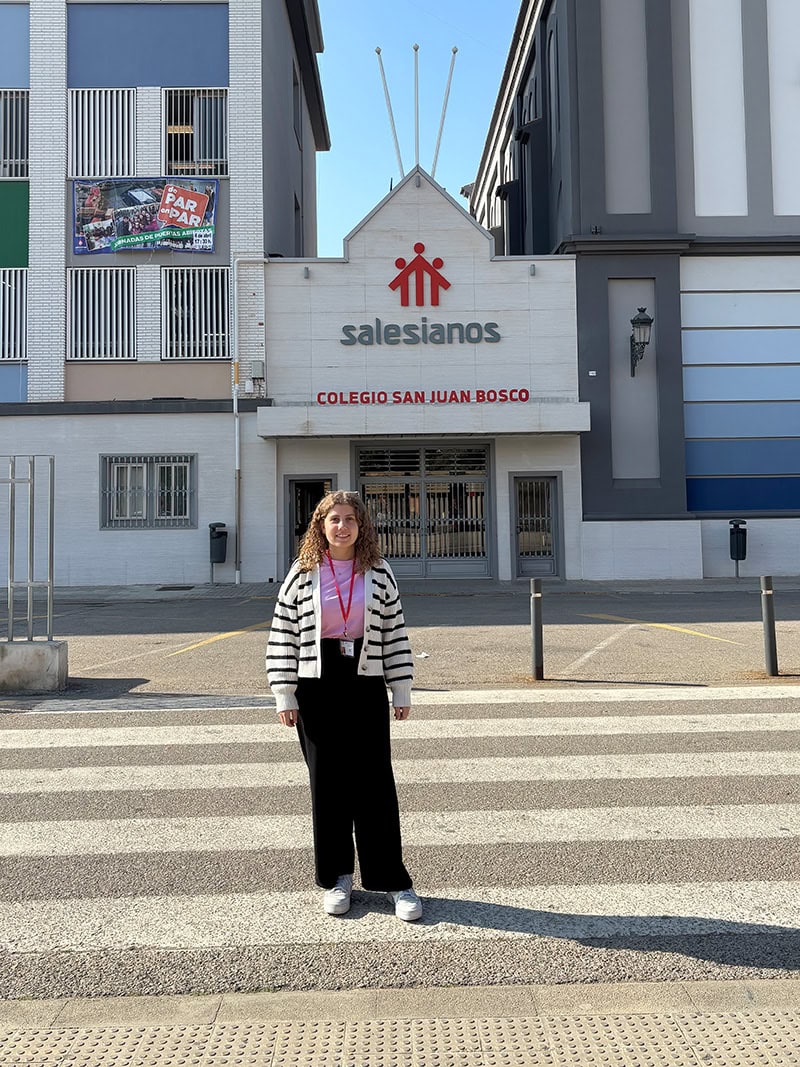
Leonie: Of course, it was a great feeling to have completed the apprenticeship. All the exam stress just fell away. But I also particularly enjoy looking back at Erasmus in Valencia. There, we first had a language course and then an internship in the commercial sector. That was a really great time and helped me grow personally. Especially when you’re in a foreign country and have to speak English, you realize that it’s not so bad if you can’t speak the language perfectly.
Was there a situation where you grew particularly, professionally or personally?
Leonie: I think there were always such situations. There were always new tasks that you first had to overcome. A good example is making phone calls. At the beginning, I often didn’t even know who was responsible for which topic. When someone called, I often had to ask around and was happy every time the conversation was over. But eventually, it becomes completely normal. It’s precisely in such situations that you grow.
Who particularly influenced you during your apprenticeship?
Leonie: Actually, many colleagues influenced me. I was able to learn something new in every department. Especially in financial accounting and human resources, there were many people who supported me and shared their knowledge. I believe I took something away from every station.
Was there any advice that particularly stuck with you?
Leonie: Not any specific advice from my apprenticeship, actually. But my mom once told me a saying that her trainer always used: “Let it sit for two days, maybe it will resolve itself.” I think there’s sometimes some truth to that.
After your apprenticeship, you moved into Human Resources. What was the biggest difference for you between the apprenticeship and starting your career?
Leonie: There wasn’t really a huge difference for me. I was already in HR towards the end of my apprenticeship anyway and could continue directly there. It’s nice, of course, that I can now concentrate on one area and no longer constantly switch between departments. And honestly, I’m also glad that I don’t have to write a training report anymore.
You’ve now even successfully passed your trainer’s certificate. Congratulations! Did you ever think at the beginning of your apprenticeship that you would become a trainer yourself?
Leonie: No, not at all. I really wouldn’t have expected that at the beginning. For a while, I also wondered if that was the right path for me. But in the end, I consciously decided to do it and I’m very happy about it today. I think if such an opportunity arises in life, you should take it.
What motivated you to get your trainer’s certificate?
Leonie: I just thought it was a good opportunity to get to know a new area of responsibility. I believe you can learn a lot yourself in the process. That motivated me.
What was the biggest challenge during the preparation?
Leonie: The course ran online every Tuesday evening for seven weeks, and there were weekly assignments to submit. That took time because you had to sit down again on the weekend and do something for it. You definitely notice when something like that comes on top of your work.
Has your view of apprenticeships changed through the trainer’s certificate?
Leonie: Yes, definitely. I wasn’t aware before how many topics are behind an apprenticeship and what all you have to pay attention to as a trainer. As an apprentice, you don’t notice a lot of it. That’s why I found it exciting to get to know it from a completely different perspective.
Starting in September, you will then mentor apprentices yourself. In a way, the circle closes. How does this change of role feel?
Leonie: Honestly, it still feels a bit unfamiliar at the moment. But I think that’s completely normal. You’ll get used to it over time, and then it will certainly feel very natural.
What are you most looking forward to in your future work with apprentices? Is there anything you consciously want to do differently as a trainer?
Leonie: Above all, I’m looking forward to teaching someone new things and witnessing how they develop and become more confident. What I definitely want to introduce are regular feedback sessions. That’s why I’ve already prepared a feedback form. The apprentice assesses themselves, I give my assessment, and the apprentice can also give me feedback. In addition, I want to maintain more regular contact with the vocational school.
What experiences from your own apprenticeship do you want to pass on to apprentices later? What values do you want to convey to your apprentices?
Leonie: I definitely want to pass on that you should just have confidence in yourself. I learned that especially through Erasmus. Since then, for example, I approach English phone calls much more relaxed. You don’t have to be afraid of making mistakes. It’s also important to me that people get along well in a team. That you support each other and work together on solutions, instead of against each other. I believe that not only helps you in your job, but in life in general.
How do you want to motivate new apprentices if they ever doubt themselves?
Leonie: I think such moments are just part of it. Everyone doubts themselves at some point. Then you just take some more time, explain something calmly, or practice it together again. If it works out in the end, that’s a really nice sense of achievement. And that’s exactly what motivates you again.
And finally: If your apprentices had to describe you in three years – what would you like to hear?
Leonie: I would wish for them to say that they had a good apprenticeship, learned a lot, and felt well looked after by me. Of course, you can never please everyone. But if they ultimately say that they gained a lot professionally and personally for their future path, that would be the best feedback for me.