Pfullendorf, June 12, 2026 – Sustainability doesn’t start with large investments or complex strategies, but in everyday operations: in lighting, heating, compressed air supply, or by overlooking small technical weaknesses that are hardly noticeable during ongoing operations.
IHK Weingarten Energy Scout Training
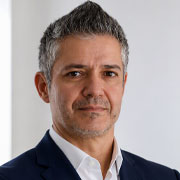
Our electronics technician apprentice for industrial engineering, Liam Gradwohl, decided to take part in an Energy Scout training course at IHK Weingarten. The goal of the qualification is to sensitize apprentices to identifying and evaluating energy-saving potential in their own companies and deriving concrete improvement measures from it.
Led by stefan Kesenheimer (IHK Weingarten), participants dealt with topics such as climate protection, energy in society, CO₂ balances, lighting, heating, and compressed air optimization, as well as concrete energy savings in the workplace. In addition to theoretical foundations, the focus was on the question: Where can we measurably improve in our own work environment?
Practical Project: Making Compressed Air Leaks Visible
Liam made this question the core of his practical project: “Analysis of the costs and energetic effects of compressed air leaks.” This is an area that offers enormous savings potential in many companies because leaks in the compressed air supply are often overlooked and are therefore unnecessary energy guzzlers. Using a leak detector, Liam checked the Pfullendorf plant and identified a total of eleven leaks. These included smaller leaks, but also significant points of energy loss requiring immediate action.
Concrete Measures for Greater Energy Efficiency
To make the results tangible, Liam used IHK software to calculate the annual energy and cost loss. This was based on factors such as system pressure, operating time, specific load, and electricity price. The result: the identified leaks cause around 197 kWh of unnecessary electricity consumption per year.
The recommendation: specifically seal leaks and replace inefficient interfaces. This saves energy, reduces costs, and simultaneously improves the company’s sustainability balance. With his project work, Liam successfully completed the training and can now officially call himself an Energy Scout.