The implementation was carried out by an interdisciplinary team from SPIE AUTOMATION in close and collaborative partnership with PUR GmbH. Project management, PLC programming, and visualization were handled by the Automation department. The department was also responsible for electrical design, including circuit diagram creation, and electrical assembly. Control cabinet construction took place at the Pfullendorf site. The conception of the cloud connection and integration into the IoT data platform were implemented by the Digital Solutions department. Through the close collaboration of the individual departments, SPIE AUTOMATION offers comprehensive solutions from a single source.
Initially, the project team analyzed the existing system, the current control, and the existing infrastructure. Based on this, a concept for migration to a modern PLC and a structured control concept was developed, forming the basis for a scalable series solution.
In the software area, the project started with a Proof of Concept (PoC) on a prototype container. Together with the customer, the control concept and the storyboards for the later dashboards were developed and continuously refined. After successful validation of data communication and the individual system components, the insights gained were transferred to the series of an initial ten containers.
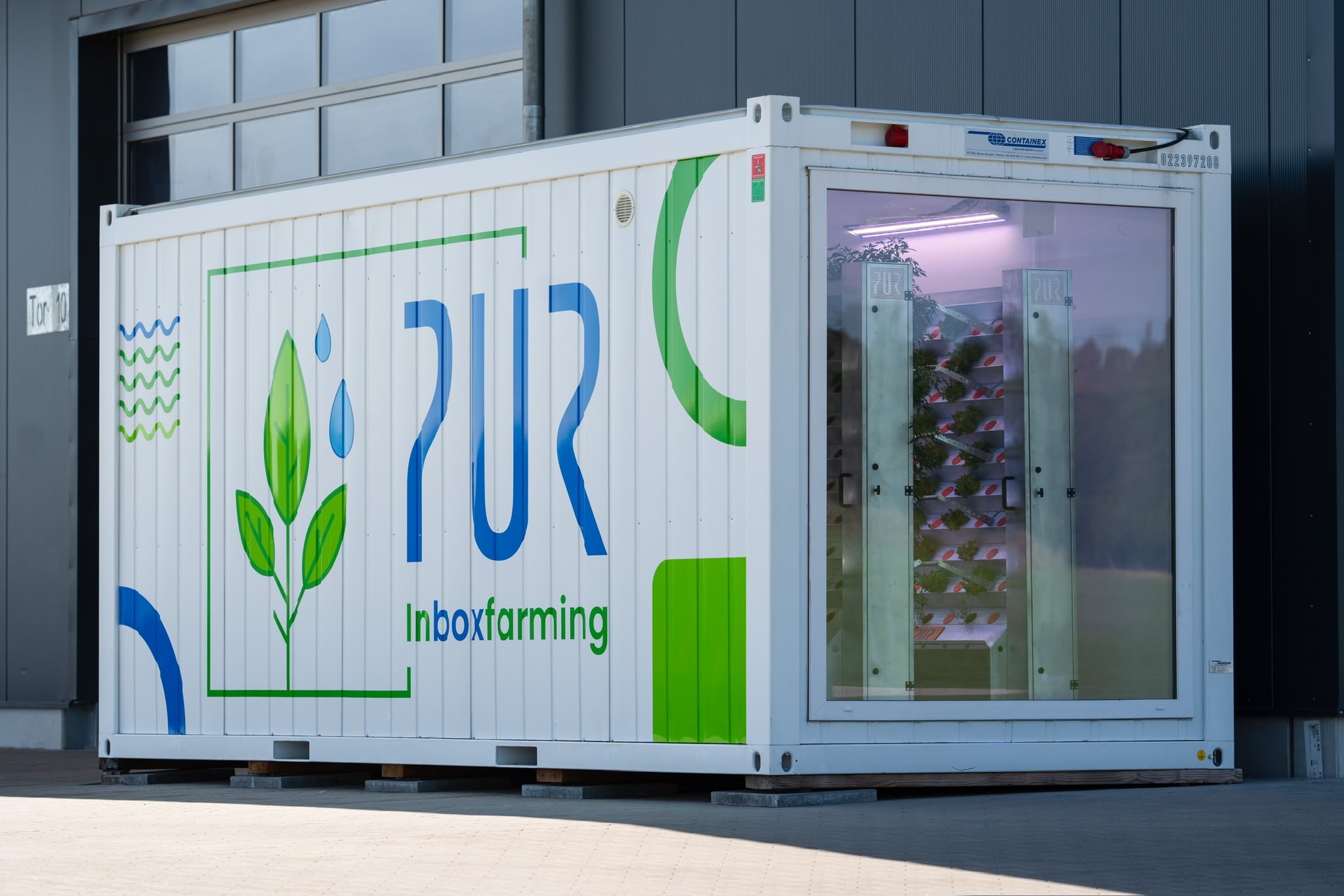
The containers were electrically revised, and all relevant components were newly integrated and wired. Subsequently, the PLC was programmed, which takes over the complete control of climate functions – heating, cooling, dehumidifying, and ventilating – as well as automatic irrigation. Regulation is based on various sensor values and considers not only control algorithms but also malfunctions and protection mechanisms.
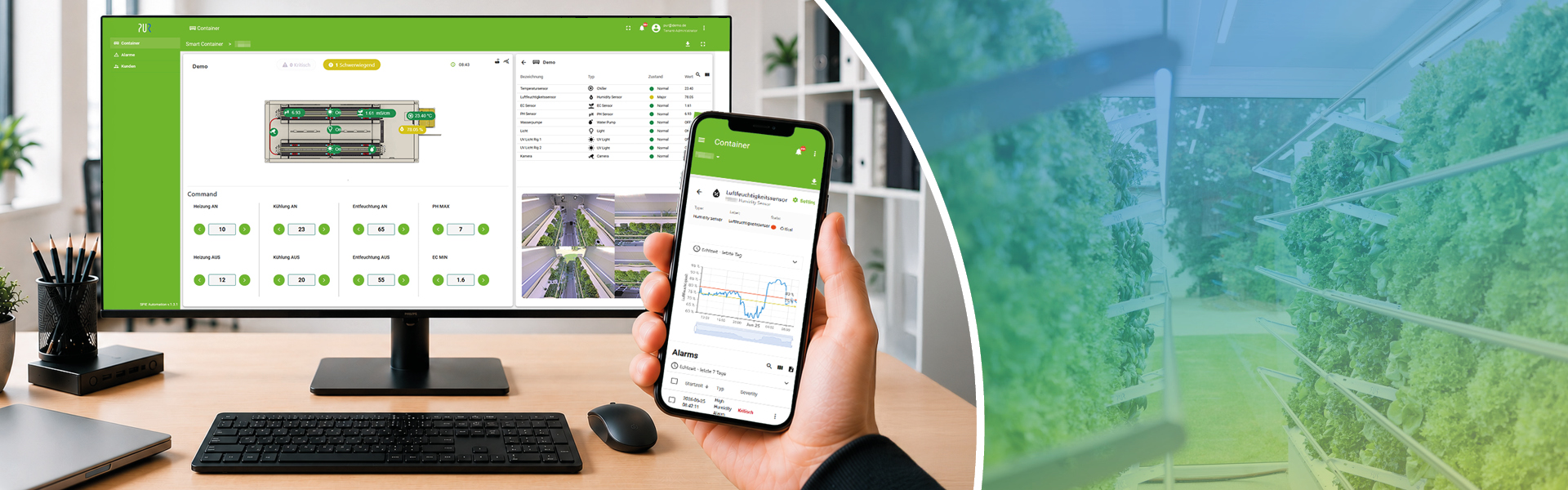
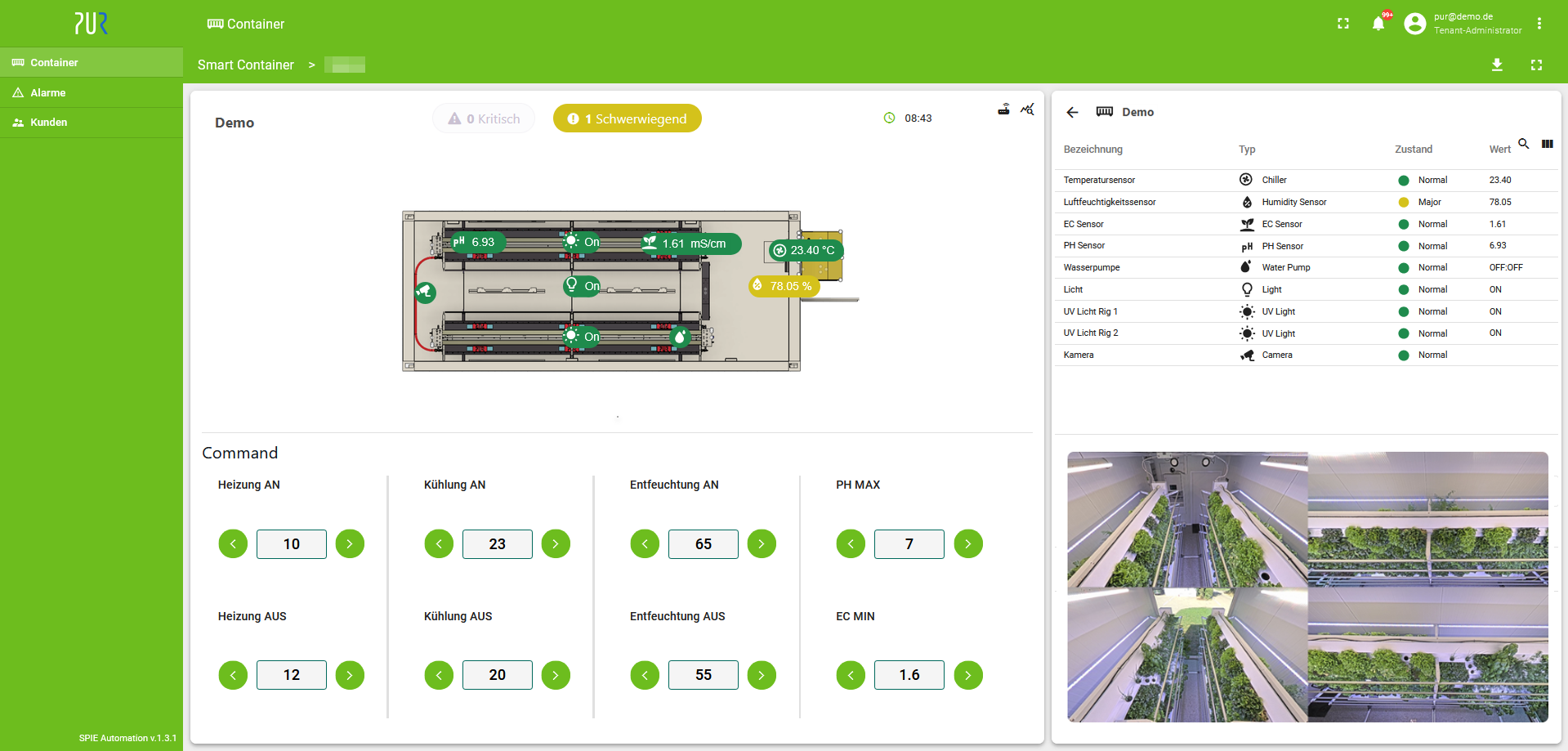
In parallel, SPIE AUTOMATION designed the web-based visualization, through which all operating states can be monitored in real-time and parameters can be comfortably adjusted. Secure VPN access also allows remote access to the PLC, as well as other components such as the integrated cameras.
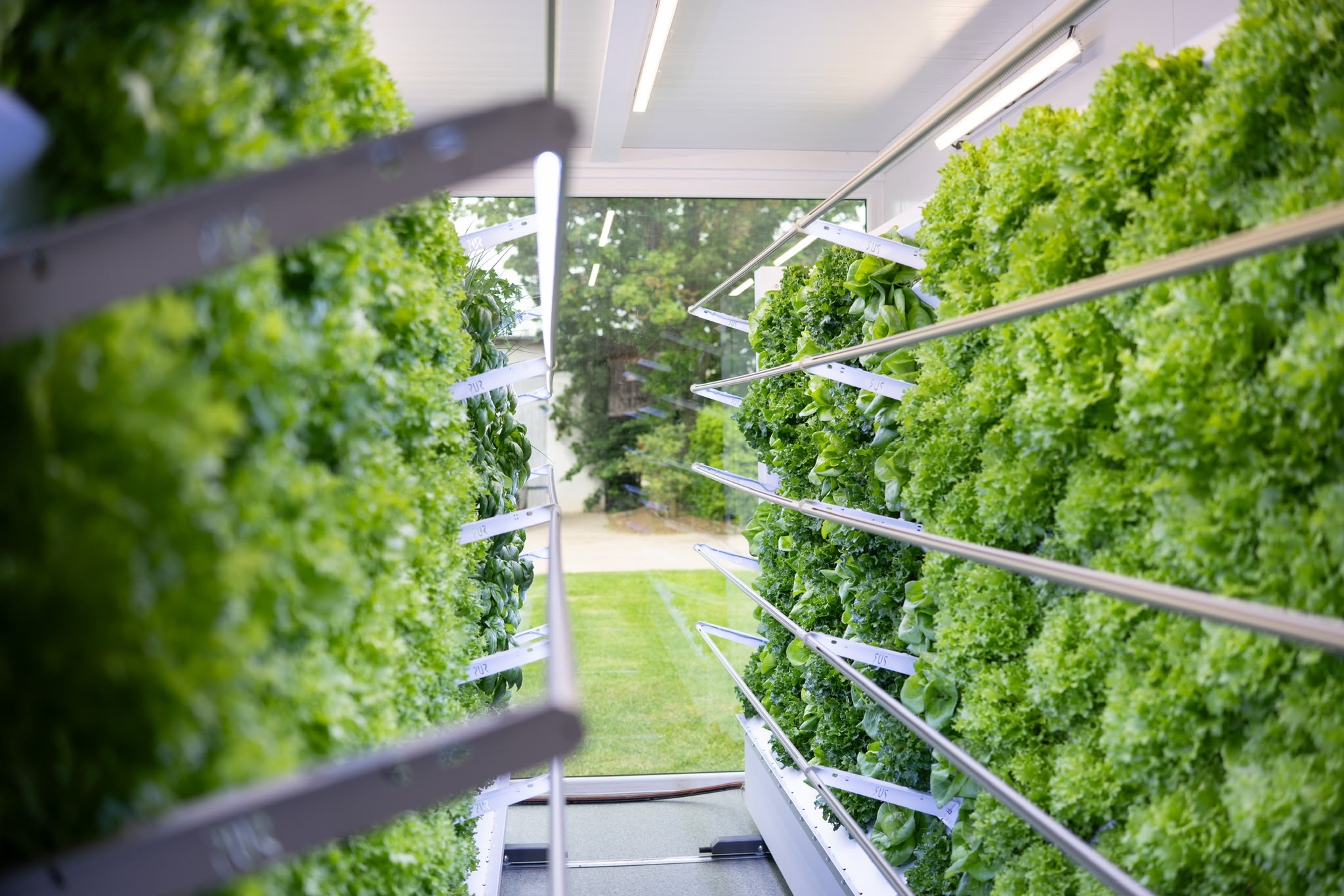
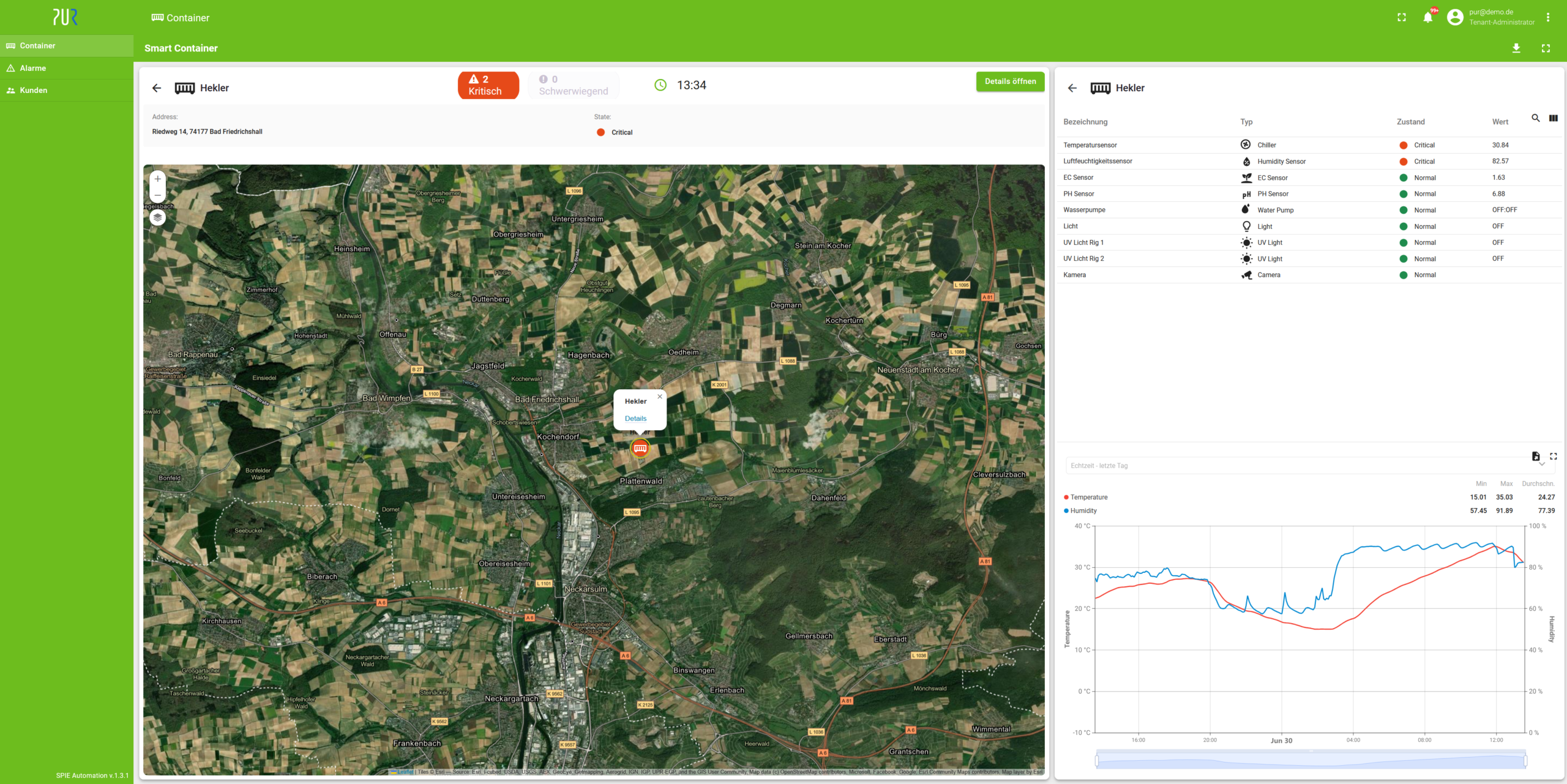
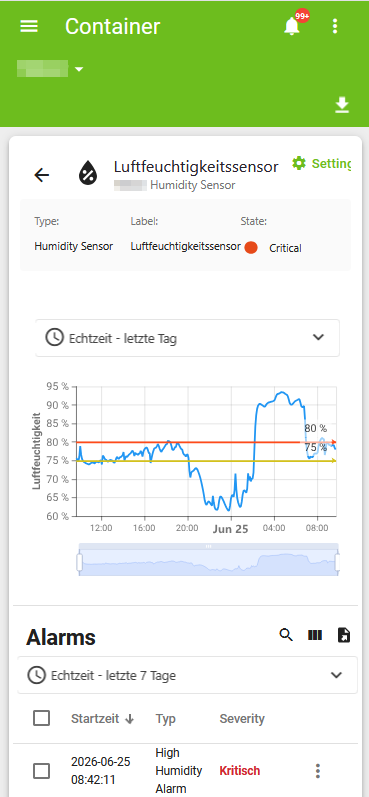
The IoT data platform receives all operational data via a 5G connection, stores it permanently, and provides it via intuitive dashboards for live monitoring, analysis, and long-term evaluations. The integrated camera also enables permanent visual inspection of the container interior, so that both the system status and plant health can be assessed remotely at any time.
Particularly noteworthy is the short project duration: less than two months passed from the first storyboard draft to the commissioning of the first container on site. Thanks to the existing IoT data platform, the PoC could be implemented within this period, as the initial administrative effort for setup was minimized.
Another challenge was to reliably connect all systems. Control, web interface, VPN, OPC UA communication, cloud platform, 5G connectivity, and camera technology had to interact seamlessly. Furthermore, it was necessary to design the mobile connectivity to be stable even under demanding conditions and to synchronize the data streams of various sensors – including conductivity sensors – correctly in time to enable robust long-term analyses.